Leases
From the first offer to a live lease, with the law built in
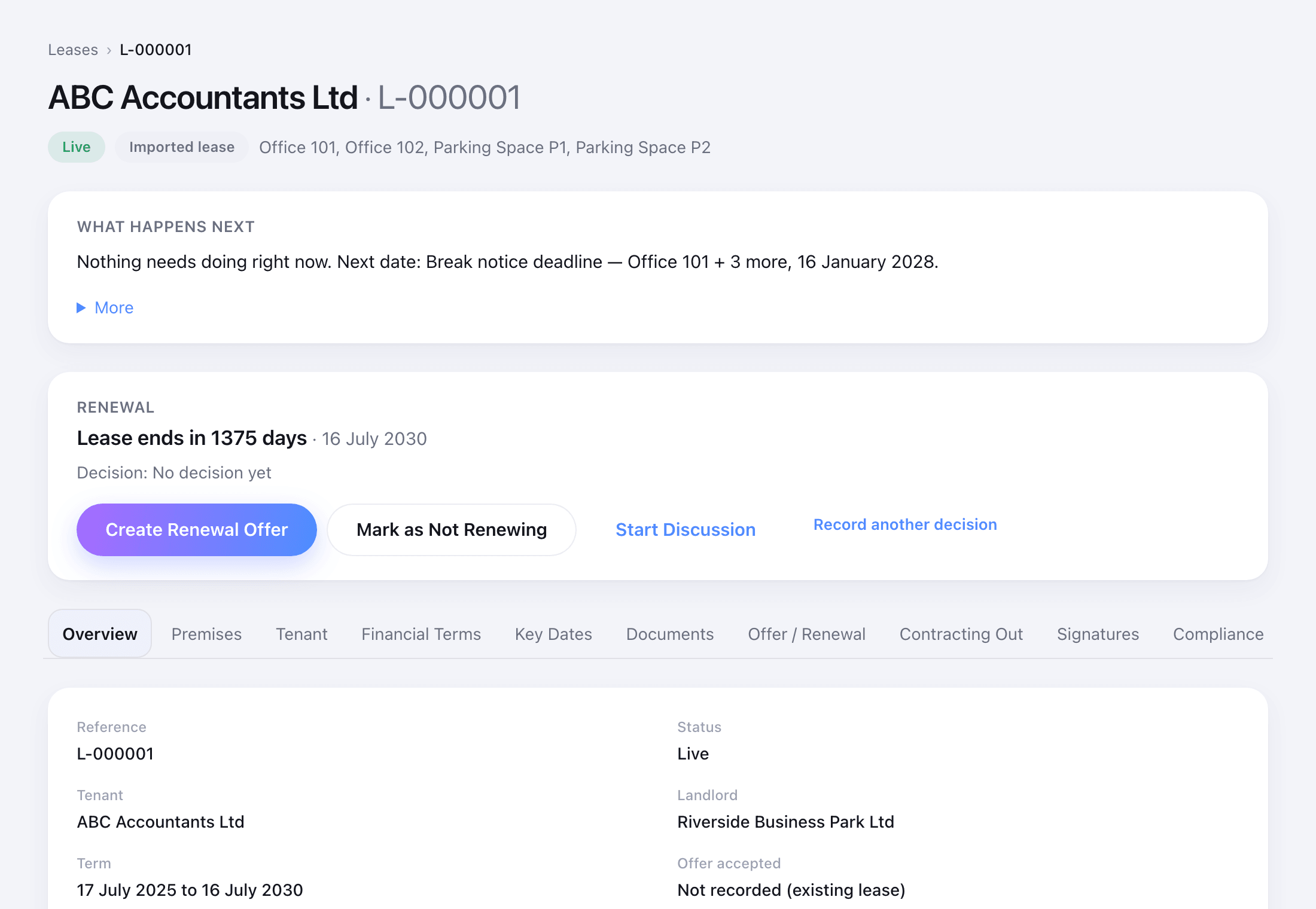
A lease in Tap Comply is a record with a history, not a PDF in a folder: the tenant, the premises, the terms, the dates that matter and every step that led to it. Where the 1954 Act applies, the contracting-out steps are a guided process with the dates computed and the paperwork generated.
What it does
In practice
Offers through a secure link
Record the prospective tenant, set the terms, send the offer. They open it through a secure link with a one-time code, ask questions, and accept or decline — every view and reply recorded.
Heads of terms and the lease document
The agreed terms become heads of terms and then the lease, generated from a template you control, with the execution wording that matches how each party signs.
Contracting out of the 1954 Act
Choose to exclude the lease and Tap Comply runs the sequence: the warning notice to the tenant, the waiting period, and the declaration — simple or statutory, depending on timing. It computes the dates and will not let the lease complete early.
Key dates become reminders
Break dates, rent reviews, expiries and renewal windows are recorded once and remind the right people ahead of time.
Renewals and holding over
A renewal is a new lease linked to the old one; the old lease is left exactly as it was. When a term ends and the tenant stays, the lease is shown as holding over, not quietly expired.
Occupancy across the estate
Every unit reads vacant, let, ending soon or under offer from the leases themselves, so the occupancy picture is never out of step with the paperwork.
Who it's for
Built for the people who carry the paperwork
- Landlords letting offices, workshops, storage and retail units
- Managing agents handling lettings and renewals for several clients
- Anyone who has served a 1954 Act notice and worried about the dates
- Finance teams who need to know what is let, to whom, until when, for how much
See it on a portfolio like yours.
Free trial · No card needed to look around